

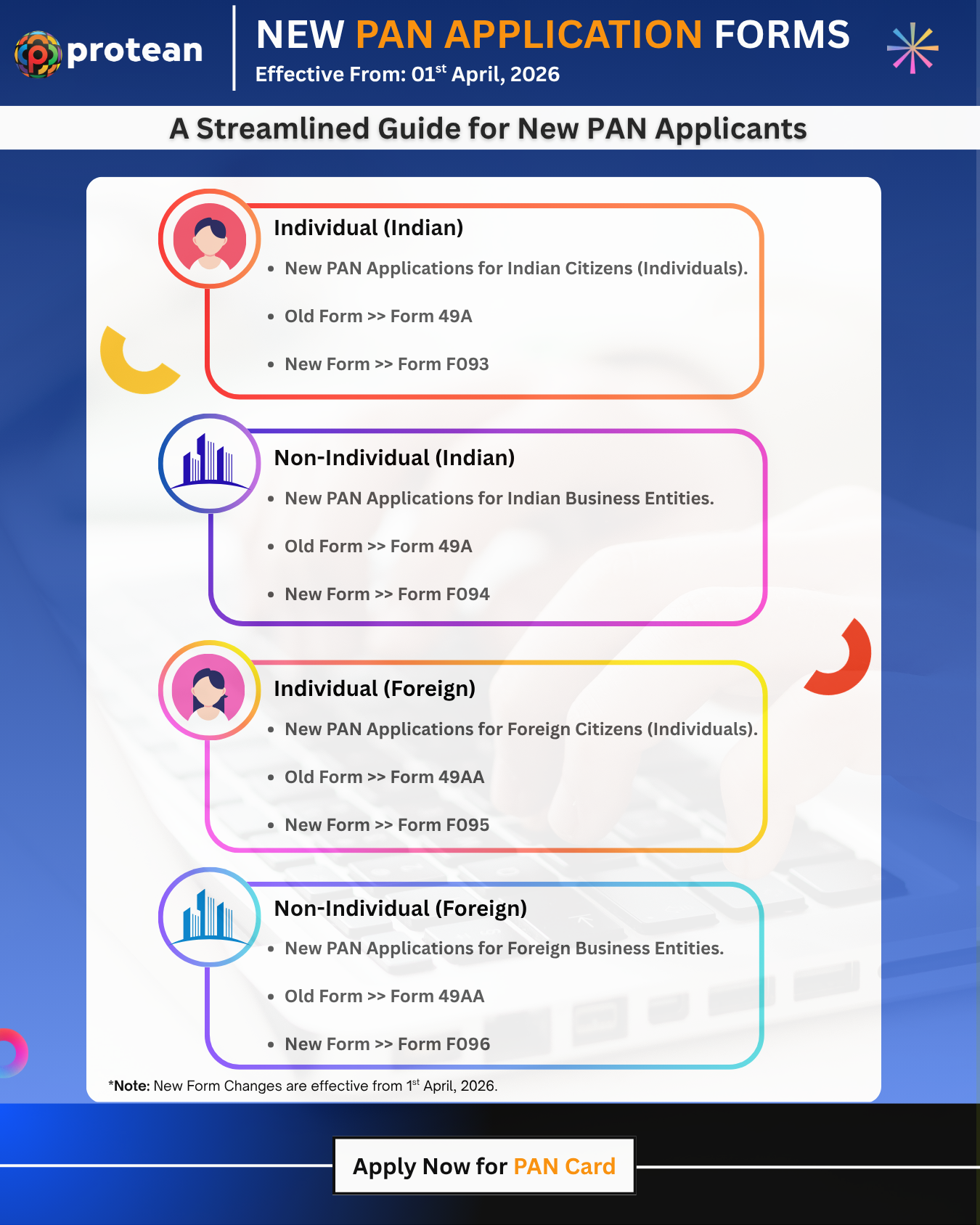
New PAN Application Forms Checklist
How to Save Tax Under the New Regime Using Corporate NPS?
Struggling to find tax-saving options after switching to the New Tax Regime?
Don’t worry, smart investors know the benefits of the new tax regime and an effective strategy to protect their income.
Corporate NPS has become one of the most powerful wealth-creation tools that offers tax advantages under the new regime. By restructuring salary components, corporate employees can reduce their taxable income.
Major updates on the NPS Entry and Exit Rules
The financial investment has evolved since the Pension Fund Regulatory and Development Authority (PFRDA) recently announced major updates to the National Pension System (NPS). The new NPS entry and exit rules have transformed from a traditional retirement pension scheme to a flexible wealth-creation investment plan.
NPS Vatsalya: Exit and Withdrawal Rules
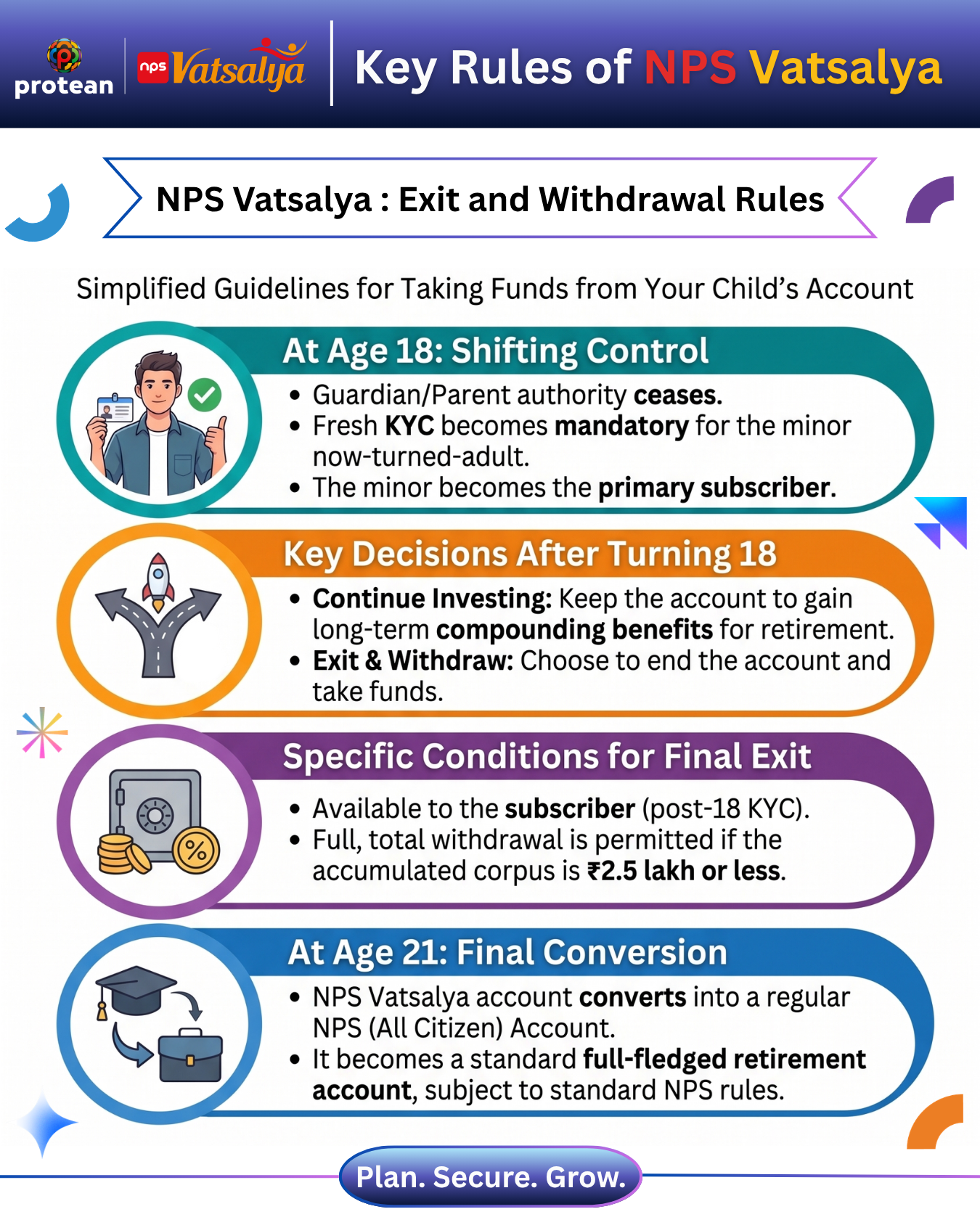
Know About Key Exit and Withdrawal Rules in NPS Vatsalya
With the NPS Vatsalya scheme, Indian parents have transformed their investment plan for the next generation, as it emphasises long-term wealth creation through market-linked returns rather than only basic financial safety.
Why Aadhaar Details Should Be Updated Before Major Life Events
Aadhaar has become one of the most important identity documents used across banking, telecom, education, travel, insurance, and government services in India. Today, Aadhaar is commonly required for KYC verification, scholarship applications, SIM activation, banking procedures, passport applications, and several other official processes. However, many citizens only realize the importance of updated Aadhaar details when they face delays during major life events or urgent documentation requirements.
Why NPS Vatsalya is the Best Child Investment Plan in India
In India, every parent wants to give the best financial security to their child. For many decades, parents relied on traditional investment methods and standard insurance policies. However, the financial needs of children growing up today are quite different from what they were in the past.
With rising inflation in education, healthcare and standard of living, standard insurance policies often fall short as an investment for the long term. So, relying on traditional methods may reduce the child’s purchasing power.
Data Encryption vs Quantum Threats: Shielding Enterprise Infra and Harvest Now, Decrypt Later Risks
Quantum risk is already an enterprise cloud-operations issue. The most immediate exposure is encrypted data at rest, long-lived keys, and certificate-based traffic that stays inside cloud perimeters but remains vulnerable to harvest-now, decrypt-later risk.
This harvest now, decrypt later model turns current cryptographic debt into future breach exposure, legal scrutiny, and operational disruption. For leadership teams, the real question is no longer whether post-quantum migration will be required.
DevSecOps in Sovereign Clouds: Sovereignty-First Automation
Sovereign cloud changes the delivery model. Enterprises need control over data residency, operational boundaries, and compliance evidence without sacrificing pipeline velocity. DevSecOps in this environment means embedding sovereignty requirements directly into development workflows, not treating them as a compliance overlay.
Top Reasons Your Request for Change Correction in PAN Got Rejected
Ever received a rejection notification for your PAN card correction? A rejected request for your PAN card is a common issue, but it is annoying for many taxpayers in India, as it delays some essential activities such as opening a bank account, loan approval, or freezes your income tax refunds.
The Income Tax Department operates on zero-tolerance policies for data discrepancies. So, understanding the reason behind the PAN card rejection can save you time.