
Lost Your Aadhaar Card? How Aadhaar OTP Verification Still Saves the Day
Are you stressed about losing your physical Aadhaar card? It can certainly be stressful and create an immediate panic regarding identity proof and access to essential services. Don’t worry: Aadhaar OTP verification can be your life-saver.
Thanks to digital architecture, the Aadhaar system is robust enough to bypass this physical loss efficiently.
How Timestamps Guarantee Legal Signature Validation After Expiry
There are several benefits associated with online signature validation. Signature validation tools have strengthened the digital signature ecosystem for secure business processes.
How e Stamp Is Streamlining Your Legal Agreements and Contracts
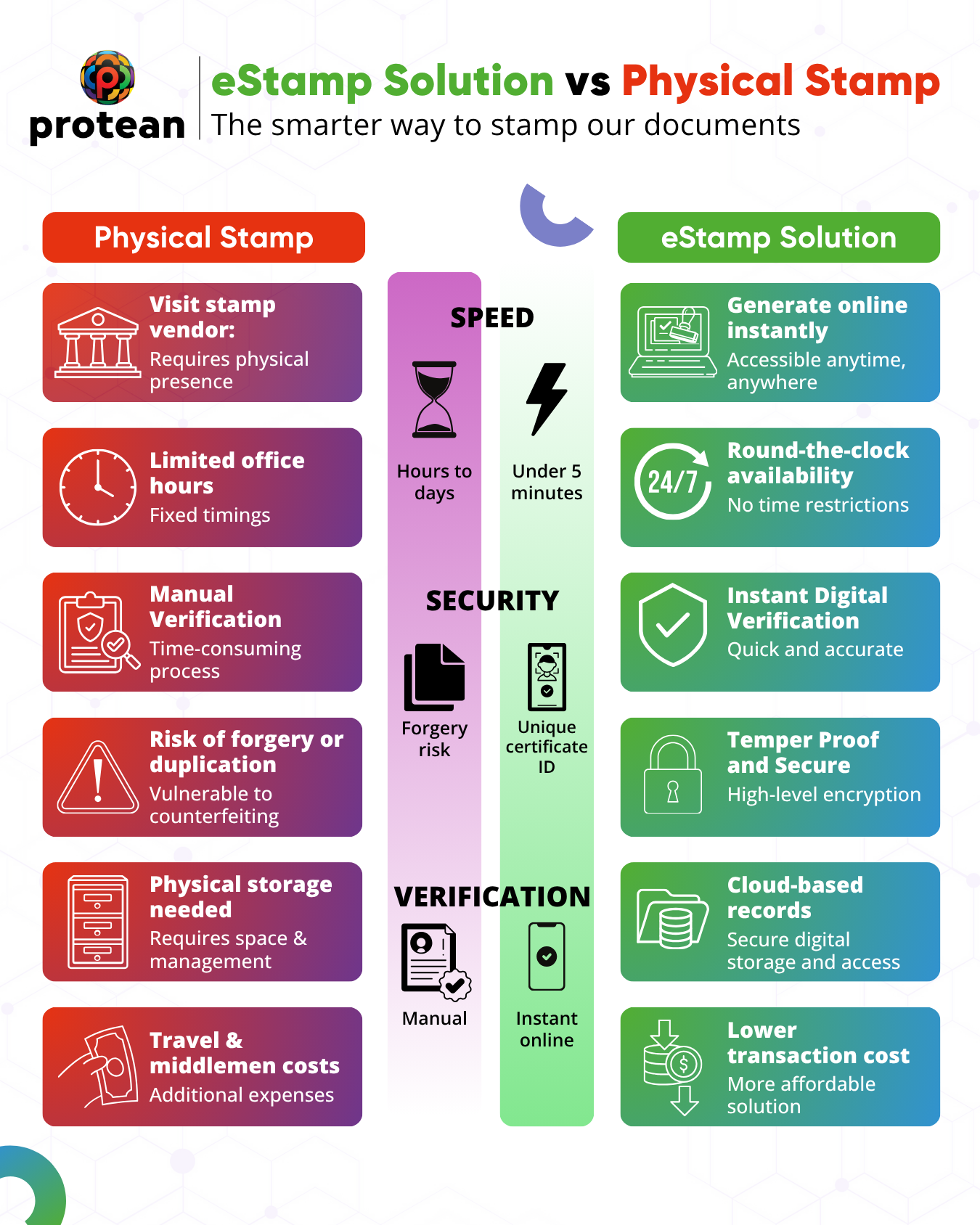
Digital transformation in India has rapidly moved beyond paperless signatures. Today, even stamp duty payment is carried out electronically.
The introduction of e stamp (electronic stamp duty) has brought speed, accuracy, enhanced security, fraud prevention, and regulatory compliance to the documentation lifecycle.
How to Build a Multiple NPS Account Portfolio with One PRAN
The NPS has followed a singular philosophy for a decade.
Is E-Signature Legally Valid for Official Documents? How Strong Is its Signature Validation?
Electronic signatures commonly referred to as e sign or e signature have become the core of India’s transition toward a paperless, digitised documentation regime.
Financial institutions, regulators and pension-related mechanisms now routinely rely on e-signature workflows to accelerate onboarding, agreements and compliance filings. But for regulated sectors and high-value mandates, the questions persist.
The Flexible Savings Option in the New Pension Scheme
The Multiple Scheme Framework (MSF) offers a customizable structure tailored to non-government subscribers' retirement planning needs. It is a new framework under the National Pension System (NPS) that enables subscribers to hold multiple schemes. The introduction of the Multiple Scheme Framework upgrades NPS investing for non-government subscribers with features like multiple schemes and flexible asset allocation.
Here is more on MSF in NPS and how it enables multiple schemes with flexible risk profiles.
Why Inclusive Scholarships Are Key to India's Future Workforce
India's economy is on a high-growth trajectory, but its future success is tied directly to the principle of inclusive growth—ensuring that every citizen has an equal opportunity to contribute. When it comes to education, this inclusivity faces a silent, significant challenge: The Overlooked Scholarship Gap.
MSF vs. UPS: Understanding the Differences for Non-Government Subscribers
While the Multiple Scheme Framework (MSF) under NPS and the Unified Pension Scheme (UPS) are both major recent changes in India’s pension landscape, their target audiences, core benefits, and underlying design principles are very different. For non‑government NPS subscribers—including private‑sector employees, corporate NPS subscribers, and self‑employed professionals—understanding how MSF differs from government‑employee schemes like UPS is important for informed retirement planning.
Understanding the Major Shift from Single Scheme to Multiple Scheme Framework
With the introduction of the Multiple Scheme Framework (MSF) under the National Pension System (NPS), retirement planning in India has been fundamentally reshaped. It marks a crucial shift—moving from a limited scheme option model to one offering unprecedented choice, personalization, and potential for higher growth.
Understanding this major shift is crucial for every non-government subscriber looking to maximize their retirement corpus.
Know About the Tax Incentives for the New NPS Schemes Under MSF
Under PFRDA’s Multiple Scheme Framework (MSF), non-government NPS subscribers can hold multiple schemes under a single PRAN, including high-risk variants that may offer up to 100% equity exposure, as permitted by the regulations and scheme design.
This major shift naturally raises an important question:
Do these new schemes under the MSF come with any separate tax incentives, or do the existing NPS tax benefits continue to apply?