In the digitalised world, customers expect an instant digital onboarding experience. However, most banks remain anchored to traditional core systems that can hamper speed.
Thus, an evident gap is created between user expectations and institutional reality. An effective solution to this can be the separation of the front-end experience from the back-end record-keeping. This can be done via an API-first layer.
With such an architecture of modern interface legacy ledger can remain completely intact. Banks adopting this strategy can experience reduced drop-off rates. Thus, a digital onboarding API can serve as an important bridge for this transformation.
Onboarding modernisation can succeed by prioritising speed without a complete system overhaul. Institutions find that digital agility determines their long-term survival in a competitive landscape.
The API-First Layer Approach
With a "Headless" onboarding layer, users can rapidly make UI (User Interface) changes without a single touch to the core ledger. This decoupling ensures that the user interface can evolve at the modern market speed. Here is how the API-first layer approach can help in core banking systems.
- The Role of the Integration Gateway - The communication between modern front-end requests and old back-end protocols is managed by this gateway. It can translate digital signals into a language that the legacy system can easily understand.
- Real-Time Data Synchronisation - Every piece of information collected during digital onboarding flows into the core system in real-time. With this, the bank records can stay accurate without manual data entry from the banking staff.
- Data Consistency - With a robust API integration, the data can remain consistent across all touchpoints. Institutions can gain the flexibility to test new features without risks to the underlying stability of the bank database.
Digital onboarding API calls work to keep the legacy core relevant in a mobile-first world. Thus, the modern onboarding architecture can protect the core banking business while ensuring constant innovation.
Leveraging Digital Onboarding APIs for Instant Verification
In 2026, the use of a specialised digital onboarding API drives efficiency for instant verification. These tools can automate the most tedious parts of the customer journey for a better user experience.
- Instant KYC & PAN Verification - APIs fetch data from central repositories to validate identity in seconds. This can significantly reduce the need for physical document handling or manual verification queues.
- Aadhaar e-Sign - Customers can apply digital signatures to contracts from their own devices using Aadhaar authentication. This removes the final paper barrier in the digital account opening process.
- Reducing Manual Intervention - Digital onboarding API-led automation can free bank staff from routine data entry tasks. Thus, administrative costs can be reduced and the final approval cycle can speed-up.
- Video KYC and Liveness Detection - Modern APIs include advanced liveness checks to prevent identity fraud.
- Security & Legal Compliance - High-quality API integration ensures secure and legally compliant video streams. These features add a "human-touch" experience through a purely digital channel. For successful digital onboarding, businesses need these granular verification layers to maintain trust.
Solving the Legacy Integration Bottleneck
Old bank systems can be accessed by modern web applications with the transformation of legacy functions into microservices. Such a modern approach can also solve the hurdles of ancient database structures without replacing it completely.
- Handling Latency and Timeouts - Older systems might respond slowly to digital requests from a mobile app. A smart digital onboarding API uses caching and asynchronous processing to manage these inevitable delays.
- Fail-Safe Mechanisms - With redundancy protocols, the customer session can remain active even if a back-end service falters temporarily.
- A Professional Image - A strategic API integration can considerably reduce the impact of legacy downtime on the front-end user experience. With this resilience, the bank can maintain a professional image at all times.
- Reliability - A core competitive advantage for traditional banks modernising their stack is reliability. Modern digital onboarding requires a steady connection to the core ledger. A digital onboarding API can optimise this connection for maximum uptime.
Enhancing the End-Customer Journey in 2026
A successful digital onboarding strategy can ensure the onboarding experience works identically across mobile, web, and in-branch tablets. This consistency can build brand loyalty and reduce user confusion during the application process.
Tailored Product Offers
APIs analyse data mid-onboarding to offer personalised financial products to the user. This can also lead to increased cross-sell opportunities for the bank during the initial sign-up phase.
Digital Consent Journeys
Consent management is a top priority for banking systems for data protection law compliance. Here is how the consent-management system works.
- Every digital onboarding API includes clear permission gates for the user.
- With these pathways, the bank collects only the necessary information with full transparency.
- Consent records stay stored in a secure digital format for future audit purposes.
- The user maintains control over their personal data.
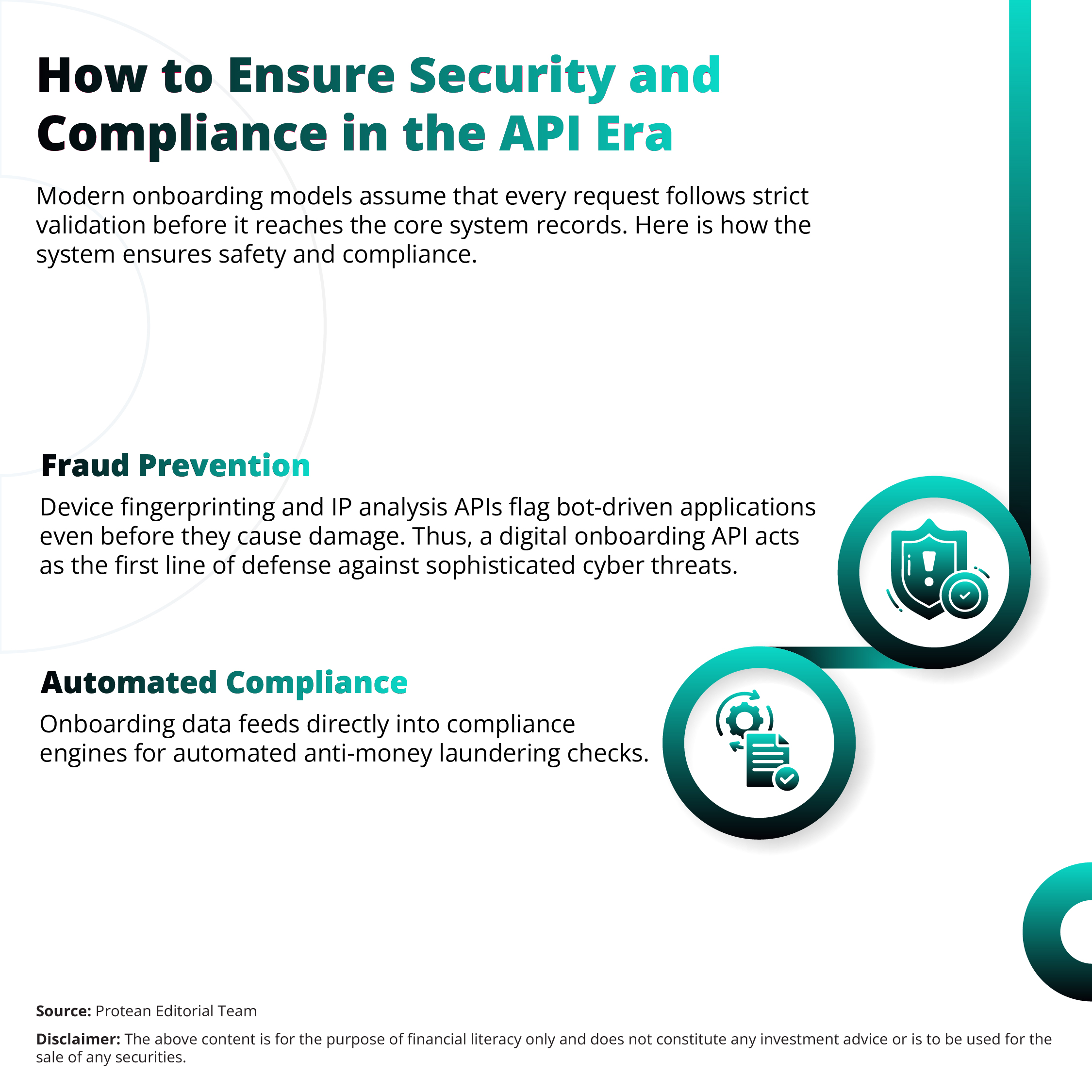
Therefore, a secure API integration can protect the reputation of the financial institution. At the same time, it can facilitate rapid growth.
Conclusion
Businesses need to perceive modernisation as an evolution rather than a revolution for traditional financial institutions. Adopting a digital onboarding API strategy can help banks compete with modern agile fintechs.
Digital onboarding APIs can considerably reduce the risks of digital disruption for established players. Thus, businesses protect their existing investments while embracing the future of banking. With the transition to digital onboarding, the entire banking industry can move towards a secure and progressive future. Protean eGov Technologies can be a partner in this journey towards a frictionless financial ecosystem, enabling sustainable growth.