Corporate Social Responsibility (CSR) is transforming rapidly in India, as companies and institutions are continuously expanding CSR allocations across sectors. However, with the high-volume funding comes a level of scrutiny and change in perspective.
As CSR budgets scale, leadership teams are expected to not just spend on the initiatives, but also to measure the impact efficiently. The conversations happening in meeting rooms are focusing more on the basic question of “What outcomes did it create?” rather than “How much was spent?”.
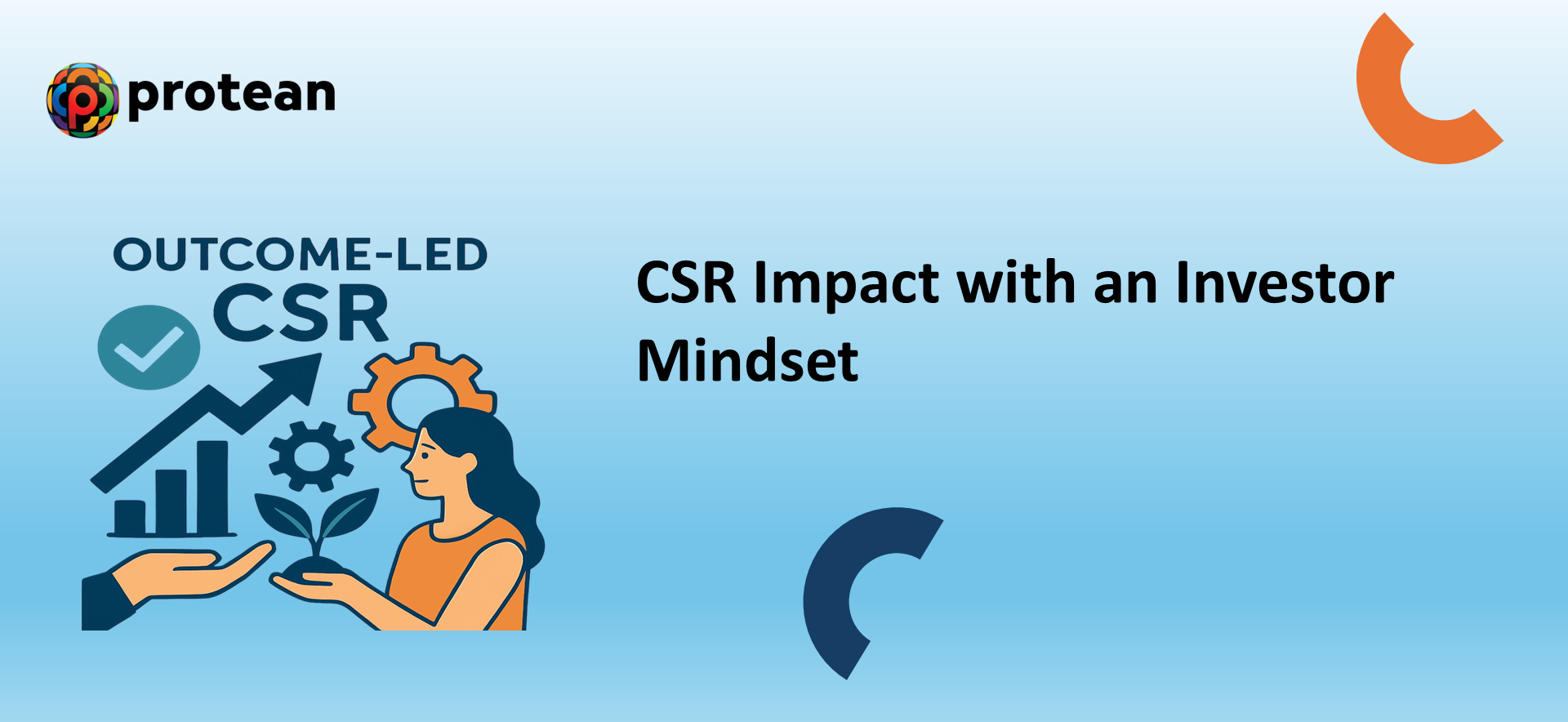
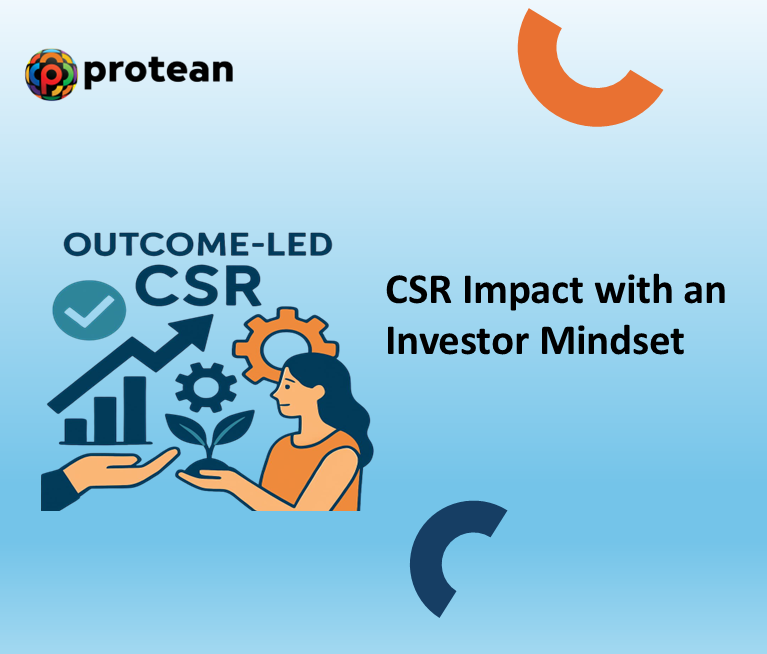
Let us understand why the future of CSR relies on transforming from a traditional mindset and adopting the outcome-driven approach of a strategic investor.
Moving away from the Traditional CSR Mindset
We must understand the Traditional CSR mindset to understand the transformation of CSR. Traditionally, CSR has often been considered mandatory spending. For many organizations in India, it was treated as philanthropy-led allocation rather than a strategic initiative. The primary focus was often compliance fulfillment and annual budget utilization. Thus, the success of the initiative was measured based on the inputs, such as the amount of money spent, rather than the outputs, like the number of lives changed.
However, modern CSR expectations are transforming beyond the traditional approach. CSR should not be seen as an expense; it should be viewed as strategic fund allocation. When corporates begin to spend with a strategic mindset, the potential for transformation becomes limitless.
The ROI thinking in CSR
Ever wondered, “How does a business evaluate a commercial investment?”
The answer is simple – Businesses evaluate investments through efficiency, scalability, visibility, measurable outcomes, and long-term value creation. Leadership demands a clear roadmap of how success would be tracked and measured.
CSR initiatives increasingly require the same mindset, for instance if a company is willing to apply analytics and key performance indicators to its marketing or operations departments, it must apply the same mindset for CSR activities.
However, the goal is not financial ROI alone, but measurable social ROI. It should focus on questions like, “Did this program improve employability?”, “Did it lift families out of generational poverty?”, or “Did it create sustainable, long-term change?”.
Why This Shift Matters for Modern Enterprises
Adopting an investor mindset is not just an exercise; it has long-term implications for the success and sustainability of CSR initiatives. Without outcome-focused fund allocation, impact becomes nearly impossible to measure. When goals are unclear, determining whether an initiative succeeded or failed becomes difficult.
Furthermore, without a strategic framework, execution inefficiencies increase. Funds can be easily misused on misaligned initiatives that fail to reach the target. In this case, reporting becomes fragmented, making it incredibly difficult to tell a story of impact to stakeholders.
Ultimately, when an initiative lacks measurable results, leadership visibility reduces which leads to weakening of long-term value creation.
What Investor-Led CSR Looks Like in Action
Investor-led CSR is about building systems that focus on measurable outcomes, scalable frameworks, and transparent tracking. Strategic CSR models prioritize repeatable execution, ensuring that successful initiatives can be expanded to new regions and demographics.
The goal of these initiatives is to focus on long-term social mobility, empowering individuals to improve their socio-economic status. India’s CSR ecosystem increasingly emphasizes impact and by adopting an investor mindset, companies can ensure their contributions generate the highest possible CSR return.
Why Scholarships Fit This Model Well
While looking for sectors that align well with the investor mindset CSR approach, education stands out as a primary fit. Education continues to be one of the largest CSR focus sectors in India.
Scholarship-led CSR initiatives support predictable outcomes because they are structured, scalable, and measurable, as they provide direct support to individuals. Furthermore, scholarships are digitally trackable and directly linked to education and employability outcomes. This structure allows organizations to monitor applications, beneficiaries, regional reach, completion metrics, and impact visibility.
Role of Technology and Data Visibility
With the right technological infrastructure, investor-led CSR is virtually impossible. Technology enables CSR teams to operate with visibility through workflows and tracking. It provides dashboard-based reporting, allowing leadership to view real-time metrics, application transparency and outcome monitoring systems.
Empowering Outcomes with Protean Vidyasaarathi
Organizations need a supporting partner that understands the mechanics of scalable and transparent execution. This is exactly where Protean Vidyasaarathi helps enable structured scholarship execution, removing administrative burden from the corporate.
It facilitates scalable outreach and transparent application management, ensuring that funding opportunities reach the most deserving students, even in non-metro regions. Ultimately, it delivers measurable program visibility and streamlined scholarship tracking, giving CSR leaders the exact data they need.
Conclusion
As companies look toward the future of Corporate Social Responsibility (CSR), it will not be defined by the size of budgets alone; it will be defined by how intelligently those budgets are deployed.
In 2026, the most effective CSR leaders will think less like donors — and more like long-term impact investors. This is the time to shift perspective, leverage technology, and start allocating social capital where it will generate a return for society.
Ready to scale your CSR impact beyond the metros? Connect with Protean Vidyasaarathi Today.
Frequently Asked Questions
Q1: What is the main difference between traditional CSR and investor-led CSR?
Traditional CSR is often viewed as a compliance-driven, philanthropy-led allocation focused on annual budget utilisation. Investor-led CSR, however, evaluates initiatives based on efficiency, scalability, visibility, measurable outcomes, and long-term value creation, much like a standard business investment.
Q2: Why are scholarships considered an effective CSR investment?
Scholarship programs are effective because they are structured, scalable, and measurable, that allows corporates to easily monitor applications, beneficiaries, and completion metrics.
Q3: How does a lack of outcome-focused CSR affect a company?
Without an outcome-focused approach, a company's social impact becomes difficult to measure, leading to increased execution inefficiencies.