Part of a modern business unit, you might have heard of online tools like virtual signature and digital stamping.
A virtual signature or digital signature can be an efficient business tool. However, true digital transformation in B2B requires the merger of the cryptographic intent of a signature with the regulatory compliance of digital stamping.
Here, an integration of automated digital stamping with a secure digital signature is a critical step for modern enterprises ensuring absolute legal certainty. This transition can considerably reduce operational costs and plug silent revenue leaks.
The Financial Aspects of the Digital Signature
With the traditional "wet-ink" signature process, businesses faced cycles of delays and unnecessary expenses. Also, numerous physical resources are required for paper-based signatures. The costs of such resources can constantly drain the corporate treasury.
Here’s how transitioning to a digital framework can benefit.
- Digital stamping can remove the need for physical visits to government offices or the procurement of physical stamp papers.
- The business can save the huge expenses on travel and administrative logistics.
- With operational efficiency, the overall financial health of the enterprise can improve.
- Employees can complete document execution in minutes rather than days.
- With this speed, the sales team can book revenue sooner and improve cash flow.
- A virtual signature can facilitate immediate closure of contracts across different time zones.
- The elimination of "mail-and-wait" cycles can preserve the momentum of the deal.
- The company reduces the risk of deal fatigue among clients and stakeholders.
Therefore, using digital stamping strategically, can help the organisation remain compliant without manual intervention.
Hidden costs of document loss or damage can also be avoided in a digital environment. Physical papers face risks from fire, water, or simple misplacement. But a digital repository can serve as a safe and searchable archive that requires zero physical square footage.
Every agreement resides in a redundant, encrypted cloud environment. This shift can also lower insurance premiums for physical record maintenance. The collective savings from these factors can create a compelling return on investment for any modern enterprise.
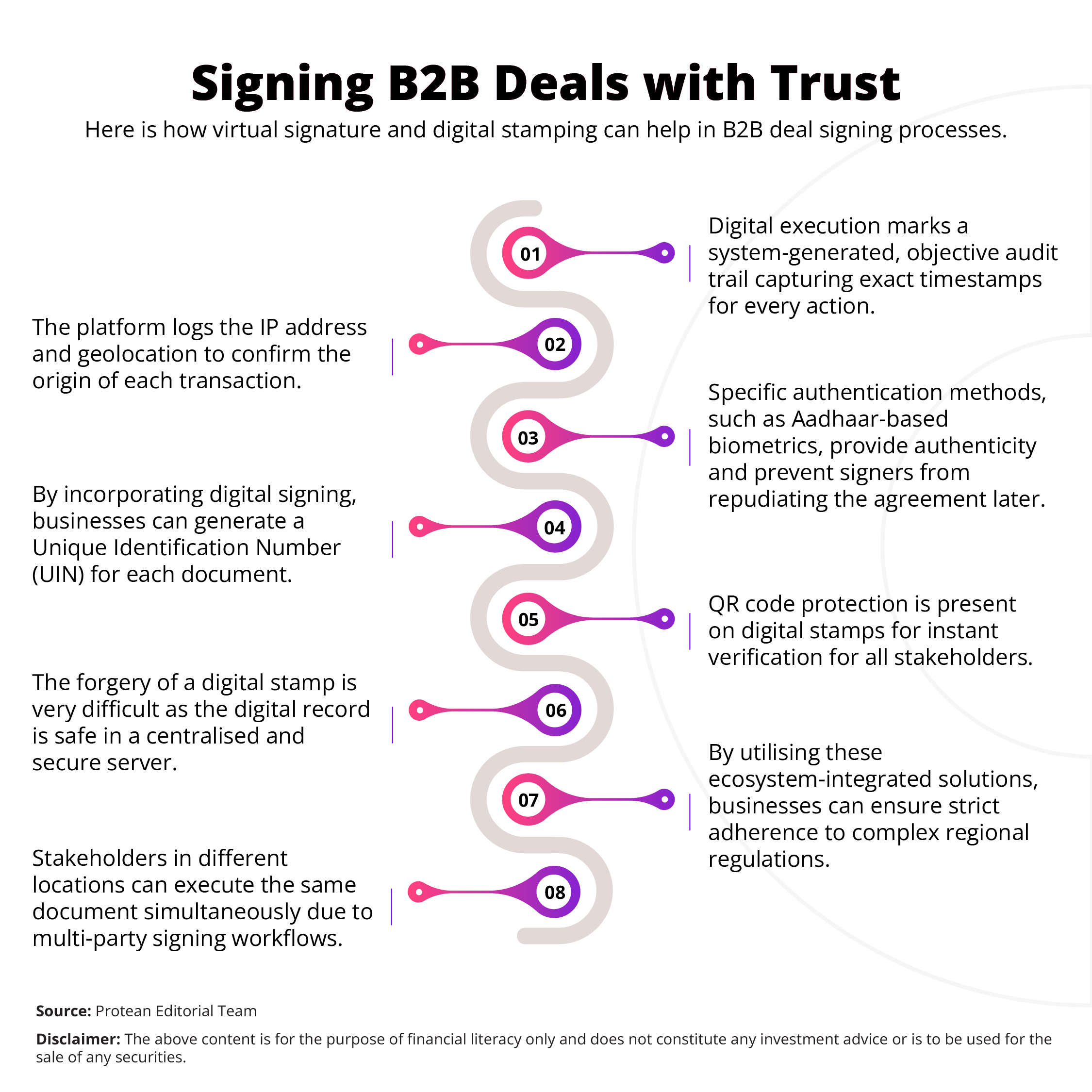
Virtual Signature & Digital Stamping Regulatory Security
Here are the security aspects of virtual signatures.
- Under Indian law, virtual signatures gain authenticity and validity through secure, recognised authentication methods.
- The Information Technology Act has laid the necessary legal foundation for the validity of electronic records.
- High-assurance solutions like eKYC-based signatures can satisfy even the most strict regulatory requirements for the banking and insurance sectors.
- By using ecosystem-integrated digital solutions, businesses can ensure strict compliance with regional regulations and data sovereignty rules.
- Automated workflows can reduce industry-specific compliance risks by enforcing mandatory fields and protocols before execution.
- Regular updates keep the system aligned with the latest legal changes.
Seamless Enterprise Integration
Modern platforms can adopt virtual signature and digital stamping capabilities directly into existing enterprise resource planning systems. With this seamless connection, business teams can initiate contracts from their familiar software environments.
APIs can also facilitate the automated flow of data between contract management tools and government-to-business (G2B) portals for compliance. Therefore, businesses do not need to juggle between different applications to complete a single deal.
Now, every contract can follow approved legal language and include necessary digital stamping protocols automatically using standardised templates. Thus, the overall agility of the procurement and sales departments is increased.
Businesses can check the status of every pending agreement with real-time dashboards. This can help managers quickly identify problems or hurdles and keep the revenue pipeline moving forward smoothly.
Conclusion
Businesses can integrate digital stamping with a secure virtual signature for unmatched operational speed, robust legal certainty, and revenue optimisation.
To finalise agreements without geographic barriers or logistical hurdles modern commerce demands a swift method. Every day spent with paper-based workflows results in lost time and increased operational risk.
Do not let paperwork stall your revenue growth. Upgrade the deal closure process with an integrated virtual signature and digital stamping workflow today.
Frequently Asked Questions
Q1: Does digital stamping carry the same legal validity as physical stamp paper?
Yes. Under Indian law, the Information Technology (IT) Act provides the necessary legal foundation for the validity and authenticity of electronic records.
Q2: Can the business use a virtual signature for all types of commercial agreements?
Most commercial contracts accept a virtual signature. However, specific documents such as wills, deeds, or notarised documents might still require traditional wet-ink physical formalities.
Q3: Is it possible to verify the authenticity of an e-stamp in real-time?
Businesses can verify an e-stamp certificate instantly by scanning the QR code or verifying it through the UIN.
Q4: Does the transition to digital signatures require complex hardware?
No. With cloud-based solutions, users can sign and stamp documents using standard web browsers on existing laptops or mobile devices.