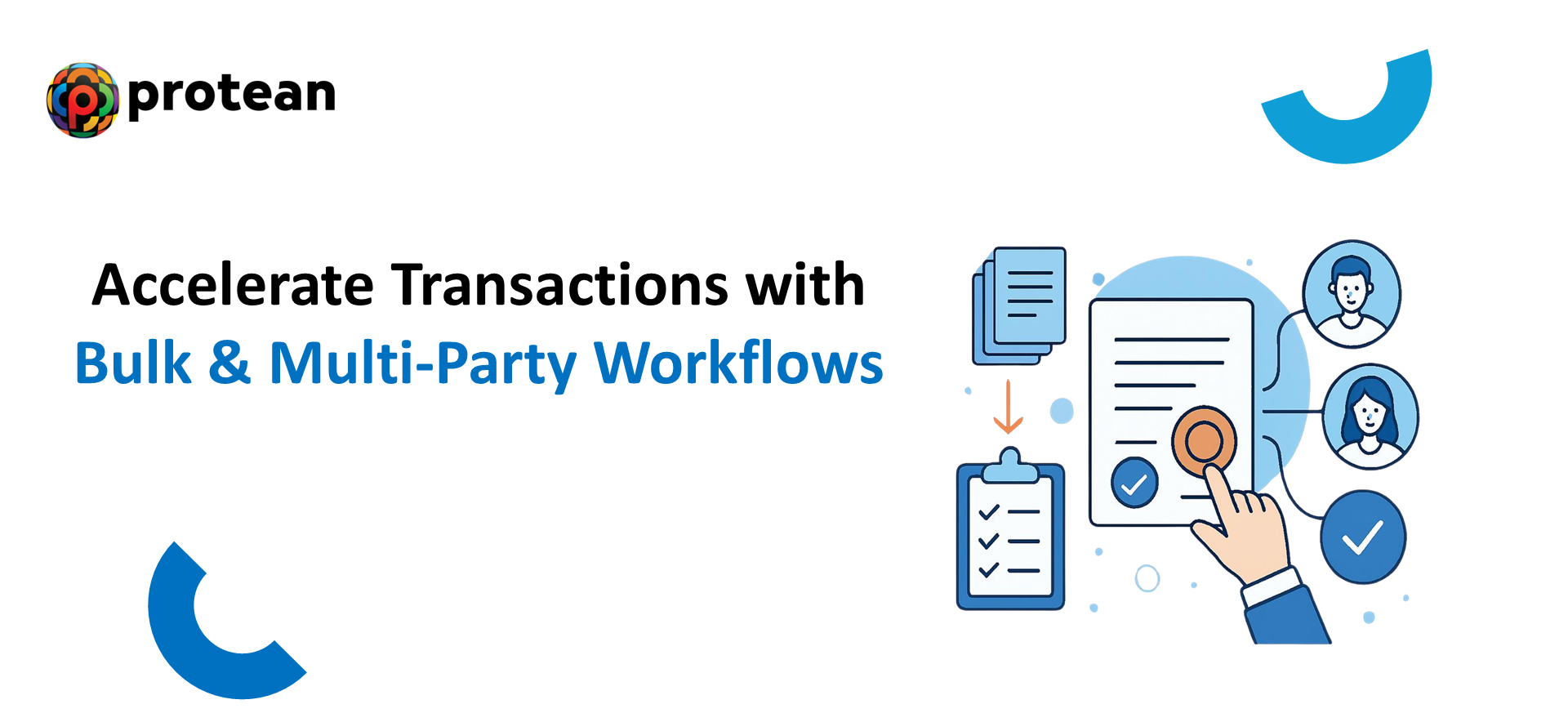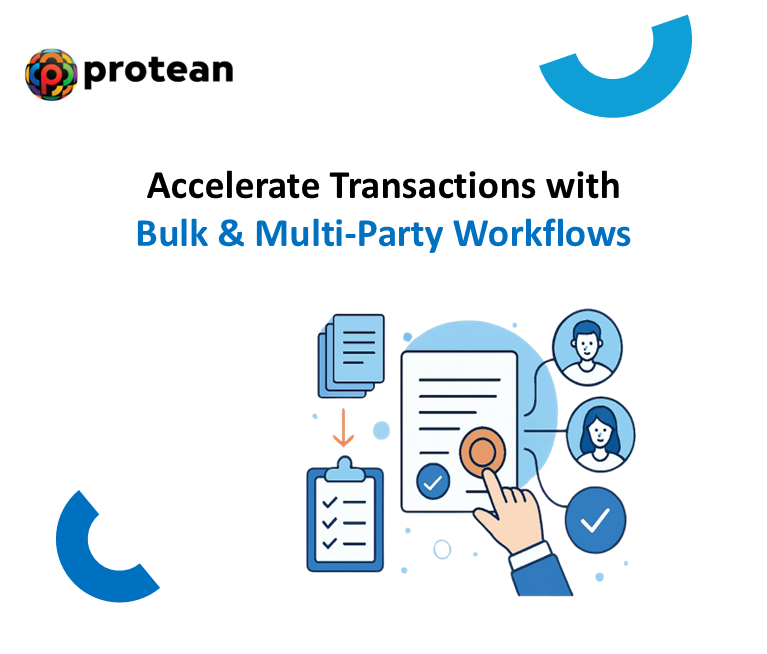
Many transactions require multiple signers and approvals in today’s digital ecosystem. Business transactions can get interrupted due to a missing signature and may create compliance issues. It is important for businesses to execute structured workflow management for high-volume processes.
Switching from manual tracking to structured workflows ensures documents are executed properly.
Let us understand how leveraging bulk and multi-party workflows can eliminate operational challenges and accelerate transaction completion rates.
What are Bulk Workflows?
A bulk workflow helps to send large volumes of documents using standardized templates. To dispatch revised policy terms or non-disclosure agreements to multiple customers or new vendors respectively, it is difficult to manually send it. This is where bulk workflows play a vital role.
Instead of manually generating individual emails, an operations manager can upload a simple data file populated with recipient details. However, dispatching the documents is not enough as the true power of this feature lies in centralized monitoring and reminders. Enterprises can gain a macro-level view of entire dispatch batch, allowing them to instantly identify which recipients have viewed the document, who has signed, and who needs a follow-up.
Also Read: Simplifying Digital Stamping and Audit Trails in High-Volume Workflows |
About Multi-Party Workflows
Multi-party workflows simplify the process of sharing one document to multiple signers and approvers seamlessly. Many critical B2B transactions do not involve just a single signature; they require coordination between internal departments and external stakeholders, as multi-party workflows handle complex processes.
For instance:
In a sequential path, a vendor agreement might first go to the legal department for approval. Only after legal signs off, it routes to the finance director, and finally to the external vendor.
If any party rejects the document, the workflow halts, preventing unapproved contracts from reaching the client. This structure ensures that every document follows corporate governance rules without the need for human intervention to push it to the next desk.
Why Traditional Processes Create Delays?
It is essential to look at why traditional document execution fails at scale. When organizations rely on manual processes, they encounter severe operational friction:
- Manual follow-ups: Operations teams waste hours drafting reminder emails to stakeholders who have forgotten to sign their portion of the contract.
- Limited visibility: Once a PDF is emailed out, senders have limited visibility into whether the document was received, opened, or forwarded.
- Missed signatories: In complex email chains, it is easy for one key stakeholder to be accidentally left off, leading to missed signatories and legally incomplete agreements.
- Version confusion: When multiple parties download, sign, and re-upload documents, it creates confusion.
Also Read: Scaling BFSI Operations with Workflow-Driven Document Execution |
How Structured Workflows Improve Completion?
Switching to a digital workflow platform addresses these traditional challenges for faster completion rates.
- Parallel signing: When a document does not require a strict order of approvals, workflows enable parallel signing as all necessary parties receive the document simultaneously.
- Configurable reminders: Systems allow you to set up reminders. The platform notifies pending signers via email or SMS at alternate intervals, completely removing the burden of manual follow-ups.
- Status tracking: Real-time status tracking ensures that managers always know exactly where a document is pending for approval in the execution pipeline.
- Escalation rules: If a document is pending for too long, workflows can trigger escalation rules, which notifies a manager to keep the transaction moving.
Use Cases Across Industries
The implementation of bulk and multi-party workflows has been crucial across several high-volume business functions.
- Loan agreements: Financial institutions route complex corporate loan agreements through risk, credit, and legal teams before dispatching them to the borrower.
- Sanction letters: Banks can use bulk workflows to dispatch thousands of pre-approved sanction letters to retail customers with tracking.
- Key Fact Statements: To maintain compliance with regulatory transparency laws, lenders can deliver and acknowledge Key Fact Statements.
- Insurance policy documents: Insurers can speed up policy issuance by routing multi-party insurance policy documents.
- Vendor agreements: Procurement teams can standardize and accelerate the execution of massive vendor agreements during annual onboarding cycles.
Also Read: Why Enterprises are Moving Beyond Basic eSignatures |
The Business Impact
When enterprise leaders invest in structured document workflows, it creates an effect of efficiency across the entire organization.
Businesses experience a reduced turnaround time, as the contracts that previously took three weeks to execute can now be finalized within hours.
This improves completion rates, as signers are less likely to abandon a process that is smooth and digital, which offers a much better customer experience.
How does eSign Pro Support these Workflows?
Protean’s eSign Pro is designed to help organizations overcome these operational challenges. It is a comprehensive platform designed to support bulk and multi-party workflows seamlessly.
It enables effortless bulk document dispatch, which allows executing thousands of templates within few clicks. For complex agreements, it ensures the document always reaches the right person at the right time.
It also combines these capabilities with secure eSignature and legally compliant eStamping & digital stamping, ensuring end-to-end execution without switching applications.
All of this is tracked through real-time dashboards that provide leaders with visibility over their entire transaction landscape.
Conclusion
Organizations handling high transaction volumes benefit from structured workflows. Relying on manual emails and scattered PDFs is now a traditional way, as it may impact business revenue and compliance.
Businesses can empower their teams by adopting a document execution platform. It is time to explore ways to improve document completion rates and reduce turnaround time across high-volume operations.
Explore ways to improve document completion rates and transform your enterprise document workflows.
Frequently Asked Questions (FAQs)
Q1: What is the difference between parallel and sequential signing?
Parallel signing allows all required parties to receive and sign the document at the exact same time, which is much faster. Sequential signing forces the document to follow a strict order, which is essential for hierarchical approvals.
Q2: Can I track who hasn't signed a document in a bulk dispatch?
Yes. Modern workflow platforms feature real-time dashboards that allow you to track the exact status of every individual document within a massive bulk batch.
Q3: Will bulk workflows help my organization scale?
Yes. Bulk workflows eliminate the manual data entry and repetitive email drafting.