Most enterprise API problems do not start with technology gaps. They start when API lifecycle decisions are spread across too many systems, teams, and workflows. Design is tracked in one place, deployment happens in another, runtime monitoring sits elsewhere, and evidence collection starts only when audits or incidents force action.
That fragmentation creates a quiet but serious control problem. Teams may believe APIs are secure and compliant, but they still struggle to answer basic operational questions quickly: Which version is live? Which policy was applied? Who approved the change? What dependencies were affected?
A one API strategy solves this by connecting lifecycle management directly with cloud infrastructure operations. Instead of treating APIs as isolated integration assets, it treats them as governed infrastructure services with clear ownership, consistent controls, and traceable change history.
| Also read: API Integration Tools |
Why This Matters Now
API traffic now sits inside customer onboarding, payments, partner integrations, internal automation, and data exchange. When lifecycle control is fragmented, risk scales faster than visibility. What looks like a technical issue quickly becomes a business issue.
Three impacts show up first:
- Response delays during incidents, because teams cannot trace API changes and dependencies quickly.
- Audit pressure, because evidence is assembled manually after the fact instead of generated continuously.
- Slower ecosystem growth, because partner onboarding and governance checks become inconsistent.
For leadership teams, this is ultimately a trust and execution issue. If governance confidence drops every time API scale increases, the operating model needs to change.
Where API Lifecycle Programs Usually Break
Enterprises rarely fail because they lack gateways or tooling. They fail when lifecycle discipline is uneven.
The most common breakpoints are predictable:
- Automation without lifecycle governance: deployment is fast, but policy enforcement and exception handling are inconsistent.
- Provider-by-provider control logic: each environment behaves differently, so standard operating controls become difficult to enforce.
- Runtime disconnected from lifecycle records: monitoring can detect anomalies, but teams cannot quickly map events to approved change history.
- Ownership gaps: platform, security, and compliance teams all own parts of the lifecycle, but no one owns the full contract end-to-end.
| Also read: API for Business Efficiency |
What Integrated Lifecycle Management Looks Like
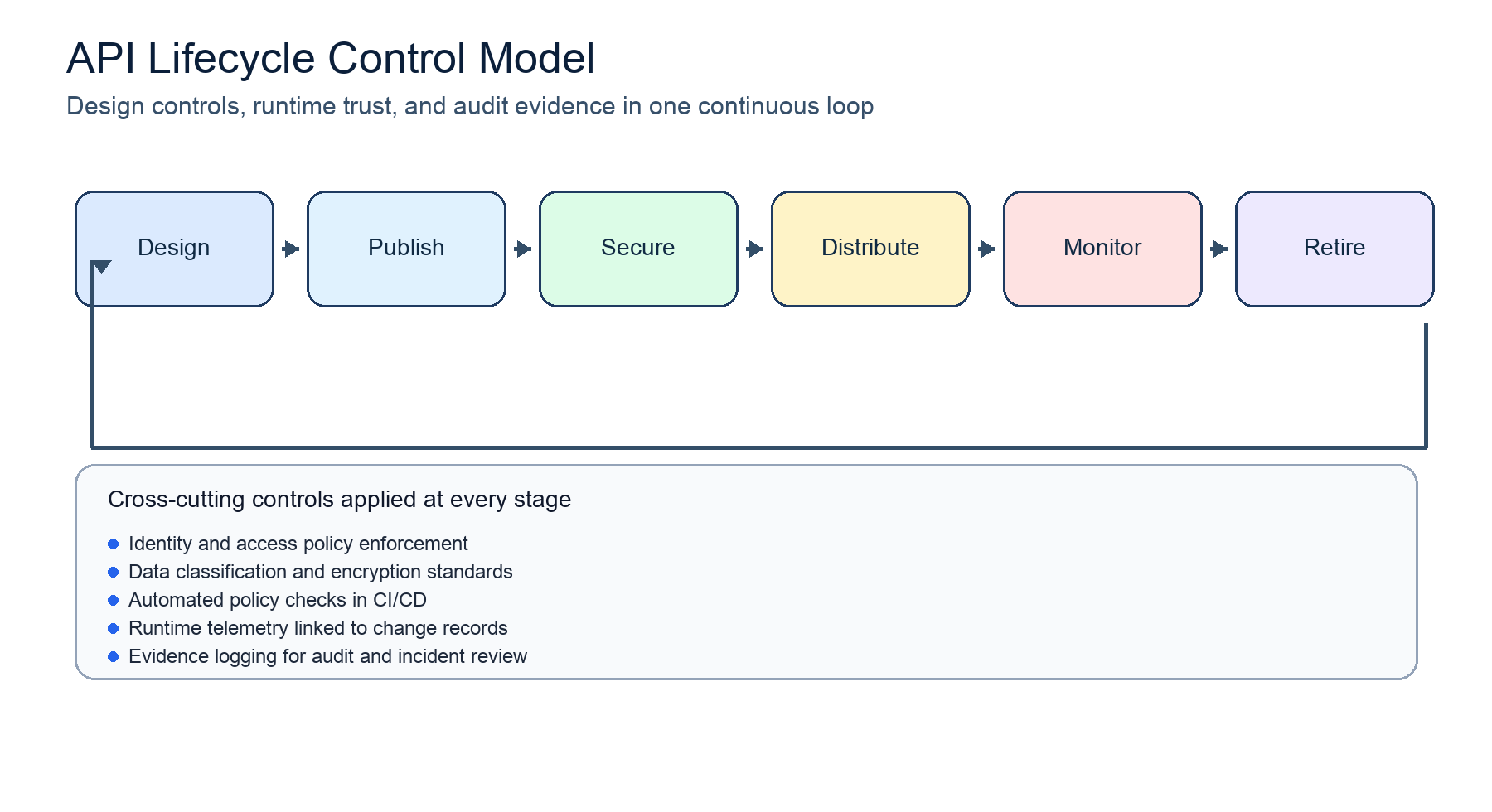
Figure 1. API lifecycle controls across design, publish, runtime, and retirement.
A practical one API strategy does not require one vendor or one cloud. It requires one lifecycle contract across environments.
In practice, that means standardizing the same stages everywhere:
- Design and publishing controls
- Authentication and authorization requirements
- Versioning and retirement policy
- Runtime monitoring and escalation paths
- Evidence logging for compliance and review
When these controls are integrated with cloud infrastructure workflows, API operations become easier to scale without losing governance consistency.
How to Build It Without Slowing Delivery
The strongest implementations avoid large-bang transformations. They build control and speed together through phased rollout.
A practical sequence looks like this:
- Create an accurate API inventory with clear ownership and data classification.
- Define non-negotiable lifecycle gates for publish, change, monitor, and retire.
- Embed policy checks into deployment workflows instead of running them as late manual reviews.
- Link runtime telemetry to lifecycle records so incidents can be traced to specific changes quickly.
- Track a small set of control metrics: undocumented endpoints, policy exception age, version drift, and time to evidence.
- Apply the same model to partner and ecosystem APIs to prevent governance fragmentation at the edge.
This is where cloud infrastructure matters most. Lifecycle intent and runtime behavior have to stay connected, or control quality degrades as scale increases.
| Also read: API & Business Agility |
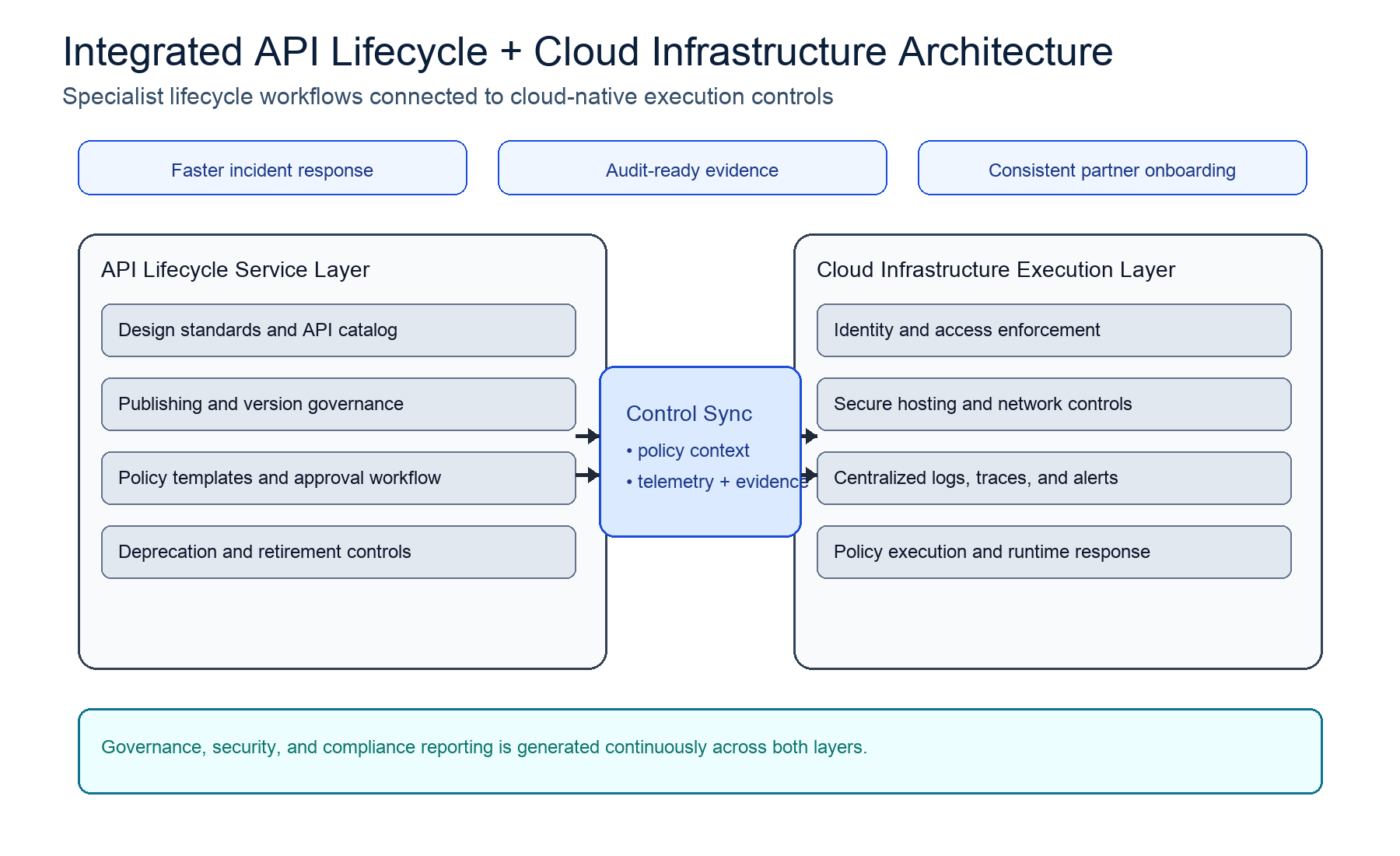
Figure 2. Integrated lifecycle and cloud infrastructure control architecture.
Conclusion
One API strategy is less about consolidating tools and more about consolidating accountability. Enterprises that integrate API lifecycle management with cloud infrastructure operations gain stronger control continuity, cleaner audits, and faster response when incidents occur.
The practical next step is straightforward: identify where lifecycle decisions are still fragmented, then bring them into one governed operating path. For organizations running partner-led lifecycle models on platforms such as Protean Cloud, this integration approach is what turns API growth into controlled, audit-ready scale.
| Also read: API Integration for Verification |
FAQs
Q1: Does one API strategy mean one gateway product?
No. It means one lifecycle operating model. Enterprises can still use multiple tools, provided design, deployment, policy, monitoring, and retirement follow a consistent control contract.
Q2: Can this work in multi-cloud environments?
Yes. Multi-cloud is usually where this approach is most valuable. The objective is to standardize lifecycle behavior across environments, not erase provider differences.
Q3: What should be measured first?
Start with lifecycle control metrics: undocumented API count, exception ageing, policy bypass frequency, version drift, and mean time to produce change evidence.
Q4: What is the most common implementation mistake?
Treating lifecycle governance as a post-deployment task. If policy, ownership, and evidence controls are not embedded early, scale increases risk faster than teams can manage.